Jordan Peterson Didn’t Oppress Me — My Biology Did
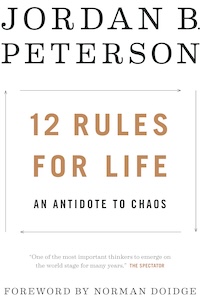
Before reading Jordan Peterson’s 12 Rules for Life, I only knew Peterson’s name in passing. I knew he was controversial. I knew in a vague way that he had made statements about trans issues and may have even been fired from his university job because of it. (He wasn’t. He publicly opposed Canada’s Bill C-16 about pronoun usage, which brought intense scrutiny, but he kept his position. He eventually resigned years later.) That was the extent of my knowledge. I picked up the book simply because the Amazon reviews were stellar.
The book surprised me in the best way. It wasn’t controversial. It was grounded, meticulous, challenging, and one of the most in-depth books I’ve ever read. It wasn’t a typical self-help book. Yes, you can look up the twelve rules and fit them on a note card, but the book isn’t really even about those rules. It’s the hundreds of pages of depth in between that make it so meaningful. Peterson brings in the Bible, Socrates, The Brothers Karamazov, Nietzsche, Freud, Jung, along with stories about his patients, friends who suffered and struggled and died young, and the suffering in his own family, including his daughter’s debilitating childhood arthritis. It read like no other book I’d read before. Being so intellectually challenged by a book was honestly a breath of fresh air in our world of sound bites. I took notes, copied passages that resonated, and I still plan to distill those, but for now, I want to write about one unexpected topic: women and biology in Rule 11.
In that chapter, Peterson argues that before modern medicine, contraception, and sanitation, women were more vulnerable for biological reasons, and that maybe it is not just the patriarchy that has held women back. Historically, women faced (and, in many places, still face):
- menstruation without modern products
- a high likelihood of unwanted pregnancy
- high risk of death or serious complications in childbirth
- the stress of caring for many children
All of this existed in addition to the same harsh conditions men endured. Peterson’s point is that it wasn’t just patriarchy that oppressed women. It was also biology. He also adds that many innovations that reduced these burdens came from men trying to make things better for women (sanitary products, anesthesia in childbirth, and contraception like the pill).
I am not comparing myself to the women in those historical conditions or to women today who still live without these advancements. What I related to, though, is the core idea: female biology absolutely still makes us more vulnerable in certain ways and, dare I say, can hold us back.
Where Biology Has Held Me Back
Biology, and not the patriarchy, has shaped my personal path. I was in a male-dominated industry but never felt oppressed by men. I did feel oppressed by my own body and still do.
For decades, my life ran on a monthly rhythm that my male colleagues never had to think about. There were energy swings, fatigue, and headaches. Moodiness, crankiness, malaise, anxiety, and pain — all due to monthly hormonal cycles. Now, in perimenopause, everything is unpredictable. There are sleep issues, temperature swings, and deeper psychological implications: insecurity about lost youth, questions of identity, and a more immediate awareness of mortality.
Women have bodies with consequences that are almost never discussed in the context of ambition, advancement, or how far we can progress in life compared to men.
Menopause, Fatigue, and the Parts We Don’t Say Out Loud
A few weeks ago, I saw a post on LinkedIn that said, “Women in menopause aren’t slowing down. They’re ruling the world.” It was meant to be empowering, but as someone going through perimenopause, it didn’t feel true to my experience. I even flirted with the idea of commenting on the post to say that I was slowing down. I didn’t want to burst their bubble, though. If you don’t get good sleep, if you have hormonal fatigue, you slow down, and I am not the only one.
I’ve reconnected with two female friends this year who are around my age. They almost sheepishly said the words menopause and perimenopause to me in passing, and only after I said I’m going through it too did they feel comfortable talking about it. They have bleeding issues, urinary problems, and severe mood disruptions.
One friend even brought up the presidency. Presidents are older than ever. Women are not in their physical prime in their 60s or 70s like men, so how can we expect a female president? It was a real comment from a real woman struggling with her biology.
Talking About Biology Became Politicized
Conversations about gender, womanhood, and identity have become so sensitive that acknowledging biological constraints can be treated as taboo or even oppressive just by bringing them up. Take J.K. Rowling. She has been pulled into heated debates simply for talking about biological sex, but biology has always mattered, and it still does. That’s the reality. Women carry burdens that culture rarely acknowledges.
Our bodies dictate vulnerabilities that men simply don’t experience in the same way. That is biology. It is true no matter how someone feels about Peterson, Rowling, or the politics surrounding them.
Feeling Seen by an Unlikely Source
Jordan Peterson is someone I never thought would speak to my female experiences and someone a friend casually described as “ultra conservative”, but he gave me language for my experience as a woman: that my limitations were not imposed by men or by a system holding me down, but by my own biology: cycles, hormones, perimenopause, and the shifts happening inside my body.
A Call for Openness
We need to talk about these realities openly and freely without cultural battles so women can support women, and so men can continue to support women with honesty and compassion.